
BLOG

Guides & Updates

Expert insights, tips, and resources for your VA disability claim

Latest Articles

Do You Still Need a Baseline for Secondary Aggravation After Spicer? What the Law Says vs. What VA Is Doing
nexus-letters5/30/2026

Do You Still Need a Baseline for Secondary Aggravation After Spicer? What the Law Says vs. What VA Is Doing

The baseline requirement for secondary aggravation claims came from 38 C.F.R. § 3.310(b). The Federal Circuit struck down that regulation in Spicer v. McDonough. The statute (38 U.S.C. § 1110) says nothing about baselines. But as of May 2026, VA has not formally rewritten the regulation, and C&P exam templates still ask examiners to address baseline. Here's the key: the exam templates themselves say the aggravation question must be answered "regardless of an established baseline." The baseline is a rating tool, not a gatekeeping tool. When it can't be determined, §§ 3.22 and 4.22 mean no deduction — the veteran gets the full current rating.

13 min read
Read more
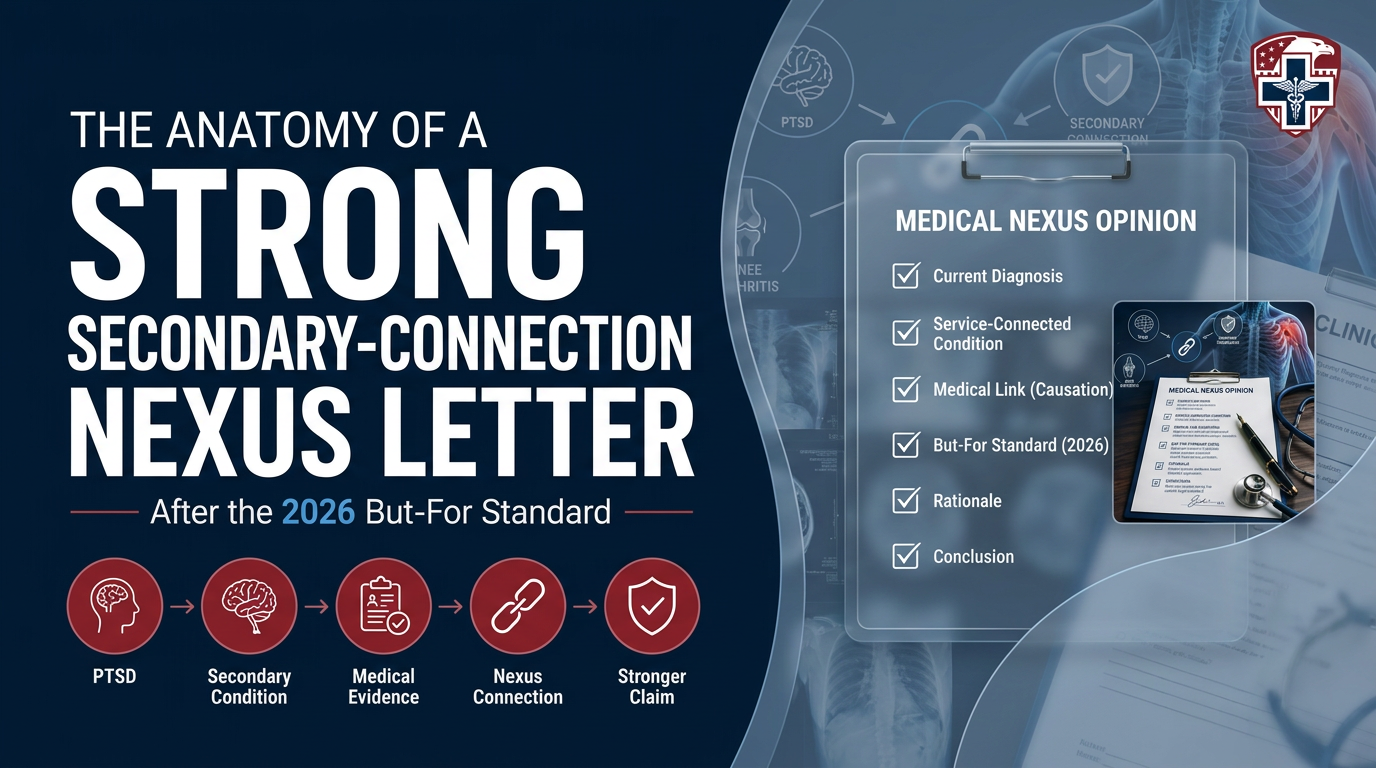
The Anatomy of a Strong Secondary-Connection Nexus Letter After the 2026 But-For Standard
nexus-letters5/29/2026

The Anatomy of a Strong Secondary-Connection Nexus Letter After the 2026 But-For Standard

A strong secondary nexus letter after Spicer v. McDonough includes seven sections: provider qualifications, records reviewed, veteran-specific timeline, diagnosis, a nexus opinion addressing all three pathways (causation, aggravation, treatment interference), medical rationale with peer-reviewed citations, and proper signature. The five most common reasons nexus letters get denied are: no mechanism explained, template language, ignoring aggravation, wrong probability language, and failing to address the C&P examiner's negative opinion.

12 min read
Read more
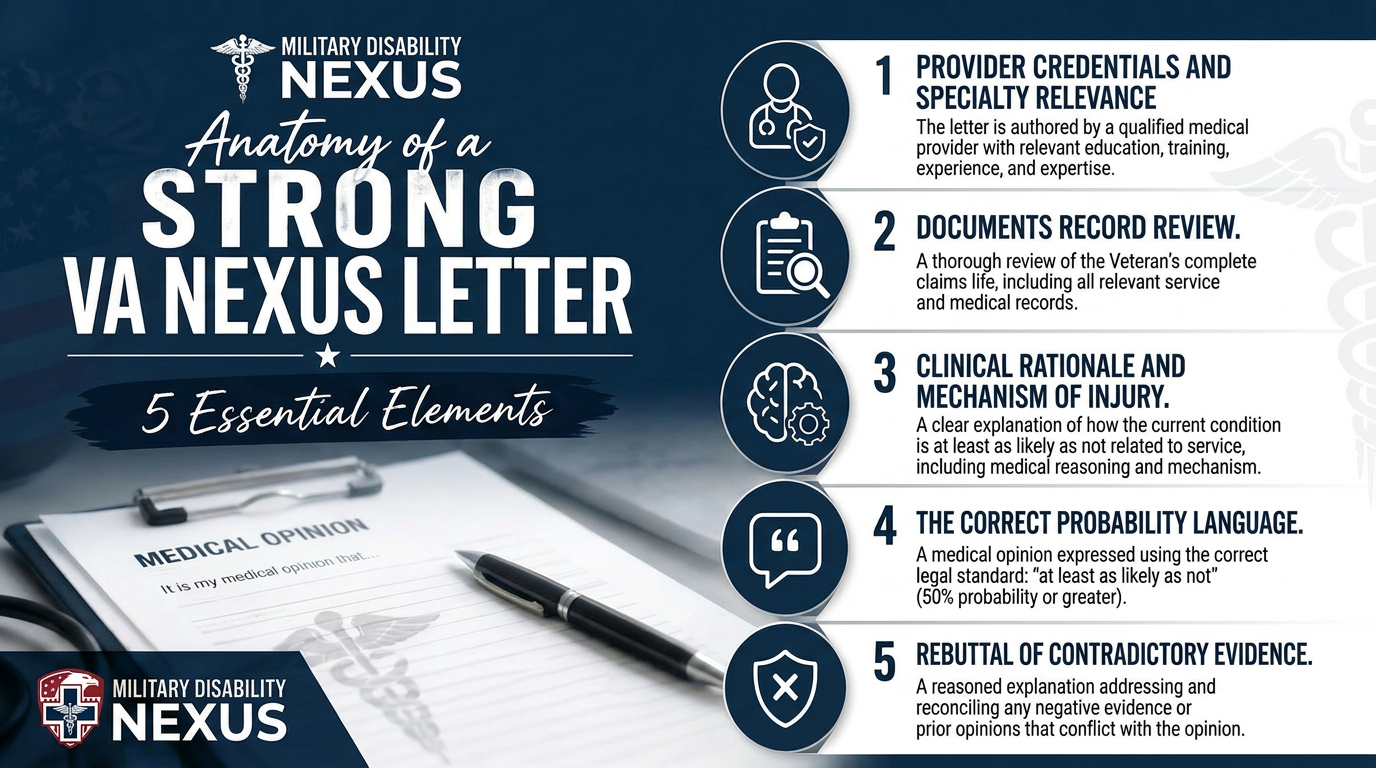
Will Filing for Aid & Attendance Put My Current VA Disability Ratings at Risk?
aid-attendance5/10/2026

Will Filing for Aid & Attendance Put My Current VA Disability Ratings at Risk?

Filing for Aid and Attendance (SMC-L) does not automatically trigger a review or reduction of your existing service-connected ratings. However, the VA may order a new Compensation and Pension (C&P) examination as part of processing the SMC claim, and the results of that examination could theoretically lead to a proposed reduction if the examiner documents improvement in a previously rated condition. Veterans with Permanent and Total (P&T) status, ratings protected under the 5-year, 10-year, or 20-year stabilization rules (38 CFR § 3.344, 38 CFR § 3.951), or ratings that are static by nature face minimal practical risk. Understanding the protections already in your file — and how to document the SMC claim correctly — is the key to filing confidently.

11 min read
Read more
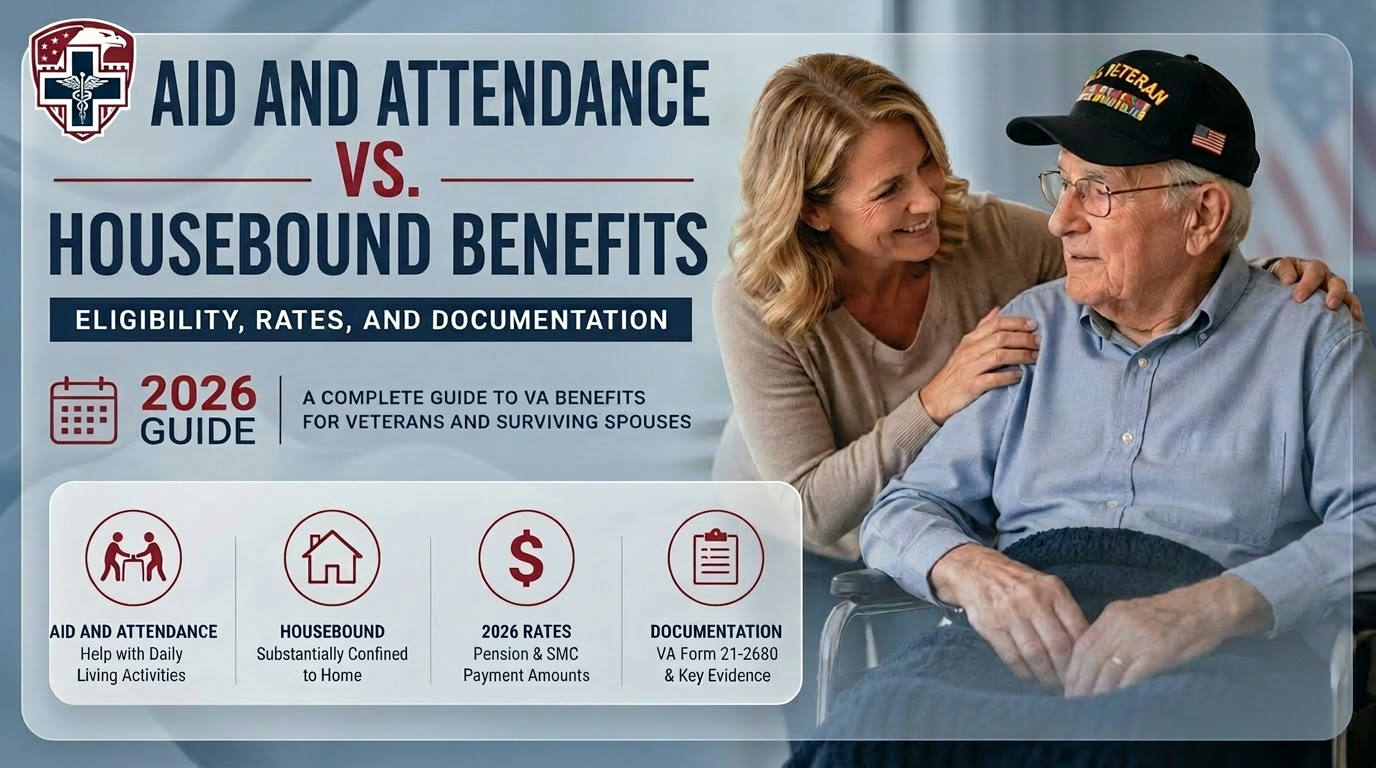
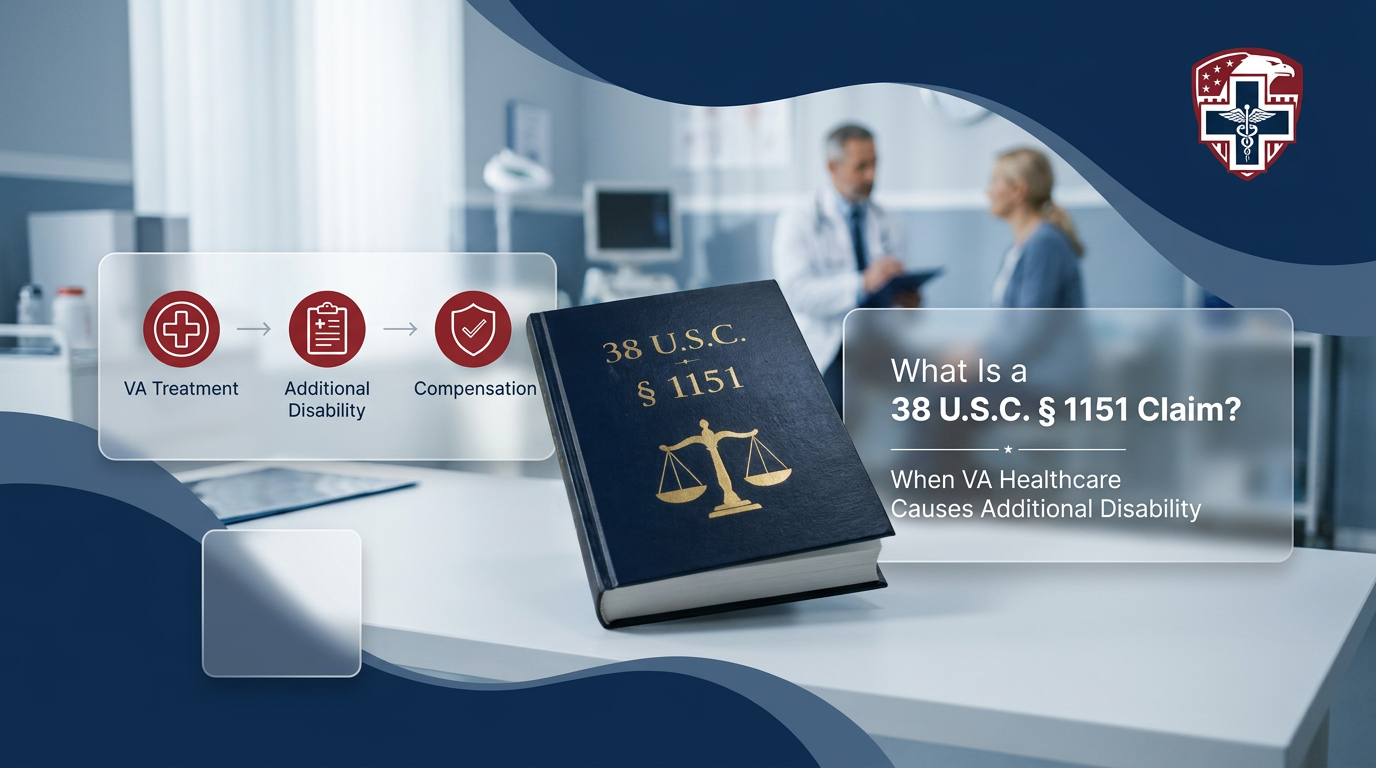
What Is a 38 U.S.C. § 1151 Claim? When VA Healthcare Causes Additional Disability
1151-claim5/6/2026

What Is a 38 U.S.C. § 1151 Claim? When VA Healthcare Causes Additional Disability

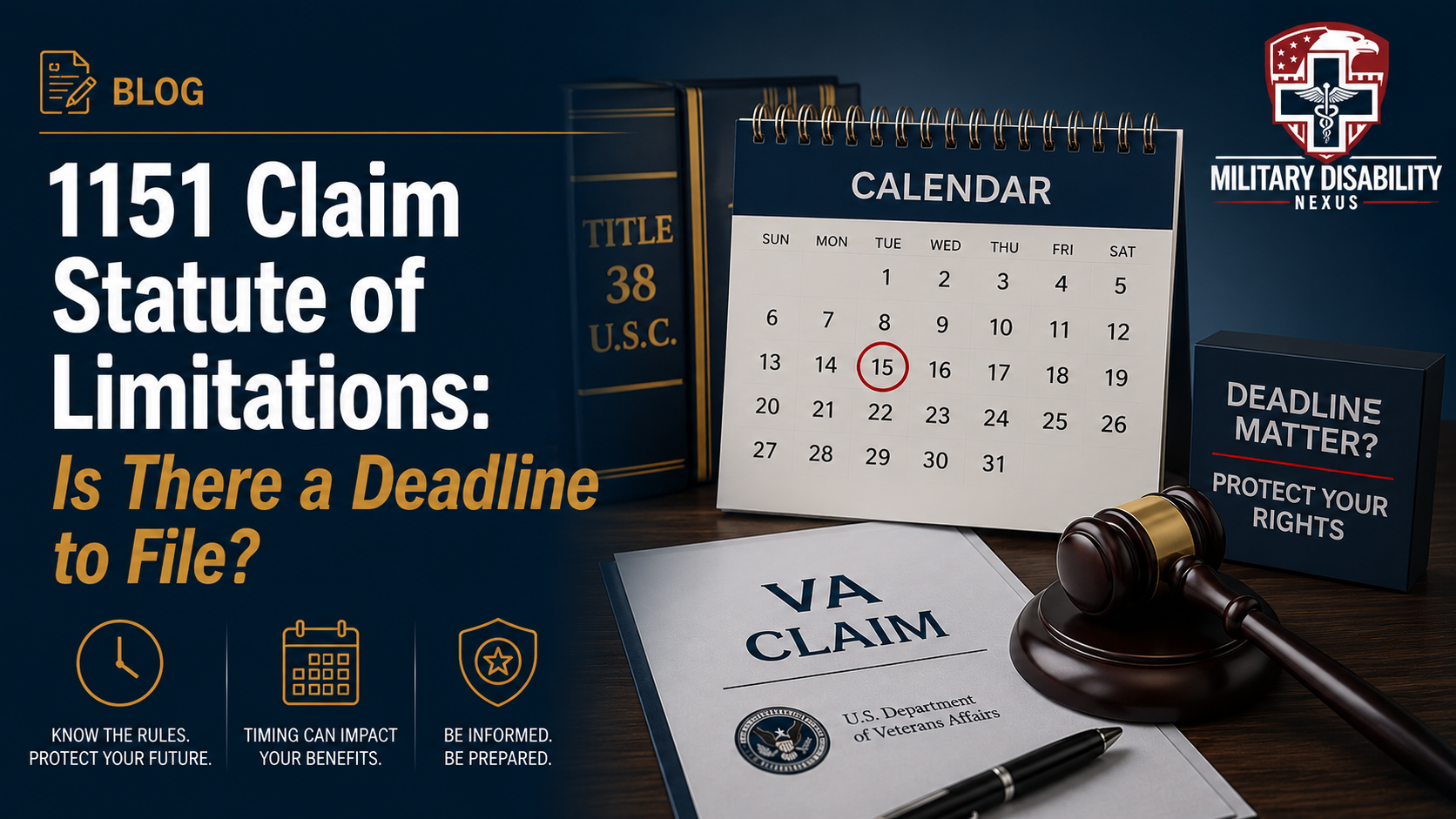
A 38 U.S.C. § 1151 claim is a VA disability benefits claim that compensates veterans who suffered additional disability caused by VA hospital care, medical treatment, surgical treatment, or examination. Unlike standard service connection, it does not require a link to military service. The veteran must prove VA care caused the injury and that VA was at fault or the outcome was not reasonably foreseeable. If granted, benefits are paid as if the disability were service-connected.

11 min read
Read more
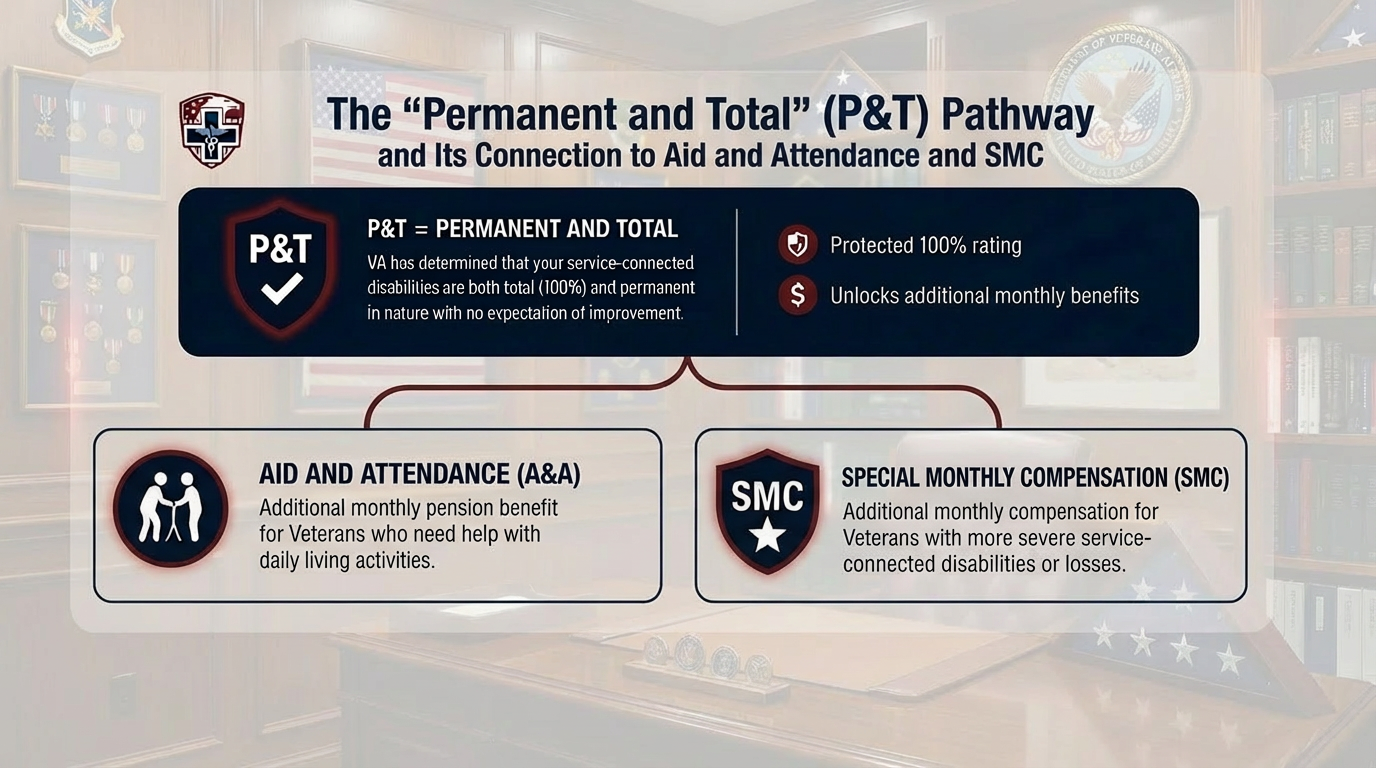
The "Permanent and Total" (P&T) Pathway and Its Connection to Aid and Attendance and SMC
aid-attendance4/28/2026

The "Permanent and Total" (P&T) Pathway and Its Connection to Aid and Attendance and SMC

Permanent and Total (P&T) means the VA has determined your service-connected disabilities are rated at 100% and are not expected to improve. P&T is not just a rating — it's a gateway to additional benefits including CHAMPVA for dependents, Chapter 35 education benefits, property tax exemptions, and eligibility for Aid and Attendance (SMC-L) and higher levels of Special Monthly Compensation. Many P&T veterans are undercompensated because they don't know about the benefits P&T unlocks or don't realize their conditions have progressed to the point of qualifying for SMC.

5 min read
Read more
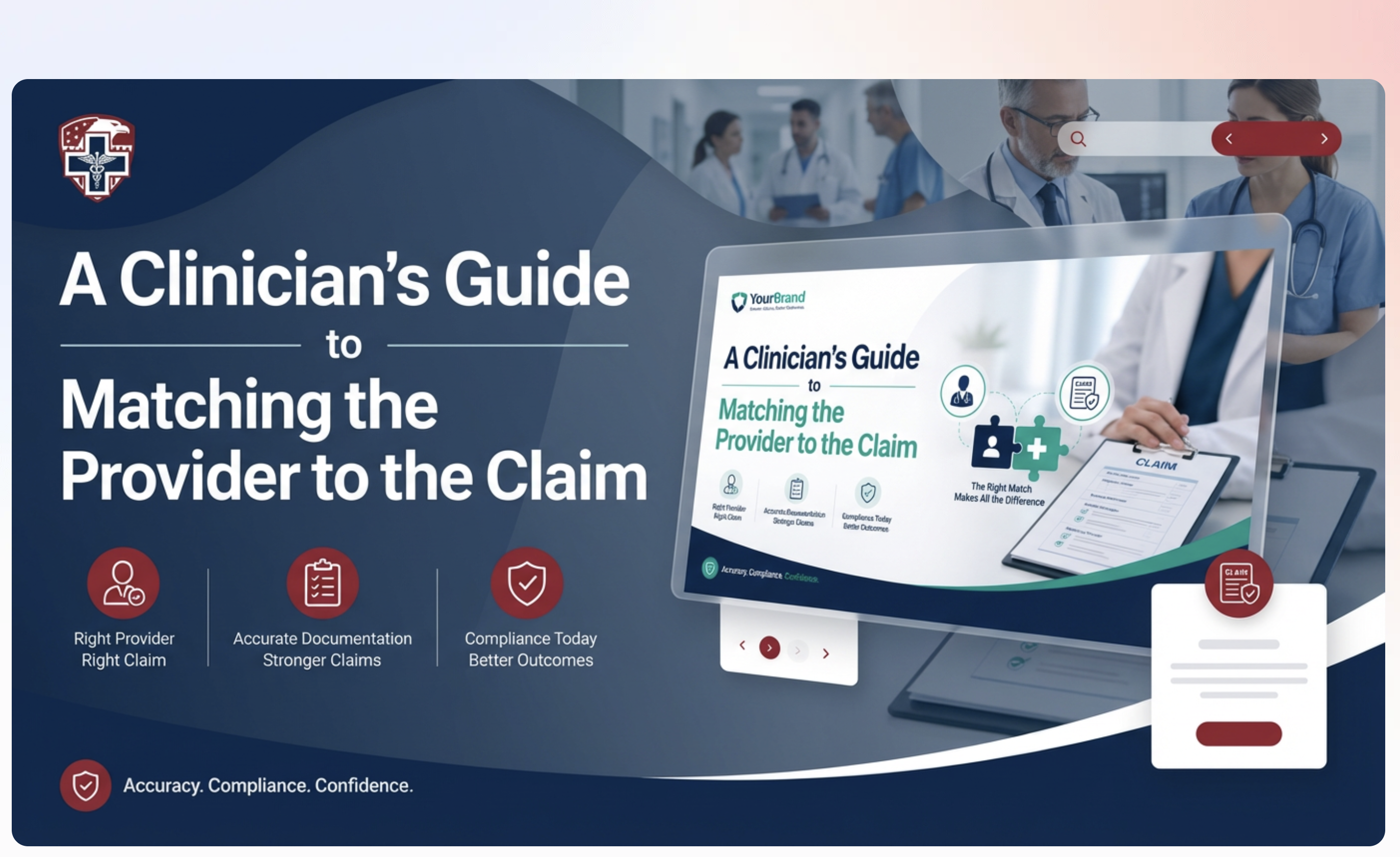
Who Should Write Your VA Nexus Letter? A Clinician's Specialty-by-Specialty Guide (2026)
general4/26/2026

Who Should Write Your VA Nexus Letter? A Clinician's Specialty-by-Specialty Guide (2026)

The VA gives the most probative weight to nexus letters written by board-certified specialists whose specialty matches the claimed condition. A psychiatrist for PTSD. A cardiologist for heart disease. An internal medicine MD for most routine claims like hypertension, diabetes, and GERD. A chiropractor only for musculoskeletal claims within their scope. Choosing the wrong specialty is the single most common reason well-documented nexus letters get assigned minimal weight and claims still get denied.

18 min read
Read more
PTSD VA Disability Claim: Nexus Letters, Denial Reasons & Your Complete Filing Guide
nexus-letters4/21/2026

PTSD VA Disability Claim: Nexus Letters, Denial Reasons & Your Complete Filing Guide

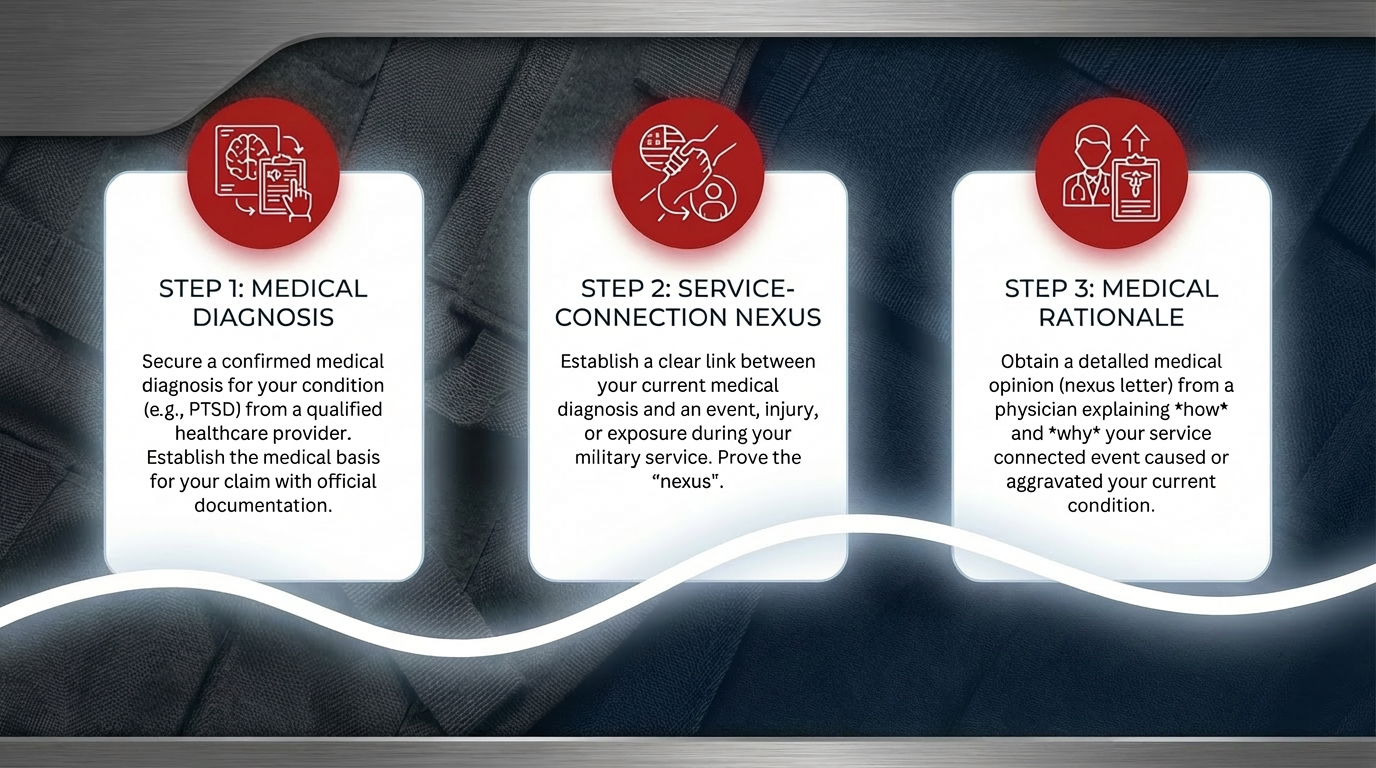
This guide explains how veterans can win a PTSD VA disability claim by meeting three requirements: a formal PTSD diagnosis, a documented in‑service stressor, and a clear medical nexus opinion using the “at least as likely as not” (≥50%) standard. It covers claim readiness, the top denial reasons, when and why to get a nexus letter/IMO, who should write it, and what makes it strong. The article also lists common secondary conditions (like sleep apnea, hypertension, depression, anxiety, IBS, migraines, GERD, cardiovascular disease, type 2 diabetes) that can increase overall VA disability ratings.

12 min read
Read more
Crohn's Secondary to PTSD VA Claim: Why It Gets Denied
nexus-letters4/20/2026

Crohn's Secondary to PTSD VA Claim: Why It Gets Denied

Crohn's disease can be service-connected as secondary to PTSD. The medical link between chronic PTSD and inflammatory bowel disease is well-documented in peer-reviewed research. But most of these claims get denied not because the connection isn't real, but because the nexus letter didn't prove it the way VA raters are required to accept. The fix is a properly structured medical opinion that covers causation, aggravation, and the specific gut-brain mechanisms linking PTSD to Crohn's.

7 min read
Read more